
About PSRI
Why PSRI Exists
American public service is larger than any statute or program. It is an ecosystem: the programs that carry public commitments to the people they cover; the veterans and military families who have shouldered the nation's service; the communities where civic and economic life is built; and the pipeline of leaders who will do this work next. When any part of that ecosystem weakens, the others feel it.
Each of PSRI's five focus areas names a point of strain in that ecosystem. Families who qualify for programs cannot always reach them, and the institutions responsible are not always answerable when they fall short. Veterans' programs carry historic commitments — and veterans themselves carry civic leadership the country underuses. Military families absorb costs of service that policy rarely registers. Communities differ sharply in the capacity they bring to public life. And the public service pipeline — the students and professionals who will staff it — needs deliberate cultivation, not assumption.
The Public Service & Readiness Institute exists to strengthen this ecosystem — through rigorous research, through convening the people who study public problems alongside the people who work on them, and through partnerships that connect students to real-world practice. Readiness is in our name for a reason: ready programs, ready leaders, and ready communities are what public service requires.
Our Approach
PSRI's work follows a Surface–Validate–Activate methodology. We surface where public service falls short of its commitments, drawing on government oversight records, agency data, and the documented experience of the people programs serve. We validate what we find against independent evidence before drawing conclusions. And we activate findings by translating them into recommendations that institutions can actually adopt.
To support this work, PSRI is developing the Public Service Execution Index (PSEI), a composite measure of how well public programs deliver on their statutory commitments. The PSEI is currently in development and will be published with a full technical appendix documenting its methodology, data sources, and limitations
How We Work
PSRI is built to be a meeting ground. We serve as an avenue for students, academics, professionals, practitioners, organizations, nonprofits, and government — including elected officials — to come together and examine new approaches to persistent public problems. Progress in public service delivery rarely comes from any one sector working alone; it comes from putting the people who study programs, the people who administer them, and the people they serve in the same conversation.
We also serve as a conduit between universities and practice — connecting students to real-world public service work through applied research, internships, and partnership programs, so that the next generation of public servants learns execution by doing it.
Nonpartisanship
PSRI is a nonpartisan 501(c)(3) organization. We do not support or oppose candidates for public office, and we do not tailor findings to any political outcome. Whether a program was created by one party or the other is irrelevant to the question we ask, which is whether it works.
Our Standards
Every claim PSRI publishes traces to a documented source: the Government Accountability Office, the Congressional Research Service, the Congressional Budget Office, agency inspectors general, official agency data, or peer-reviewed scholarship. We do not publish constructed statistics without a documented derivation, and we do not cite what we cannot verify.
Leadership Team
-
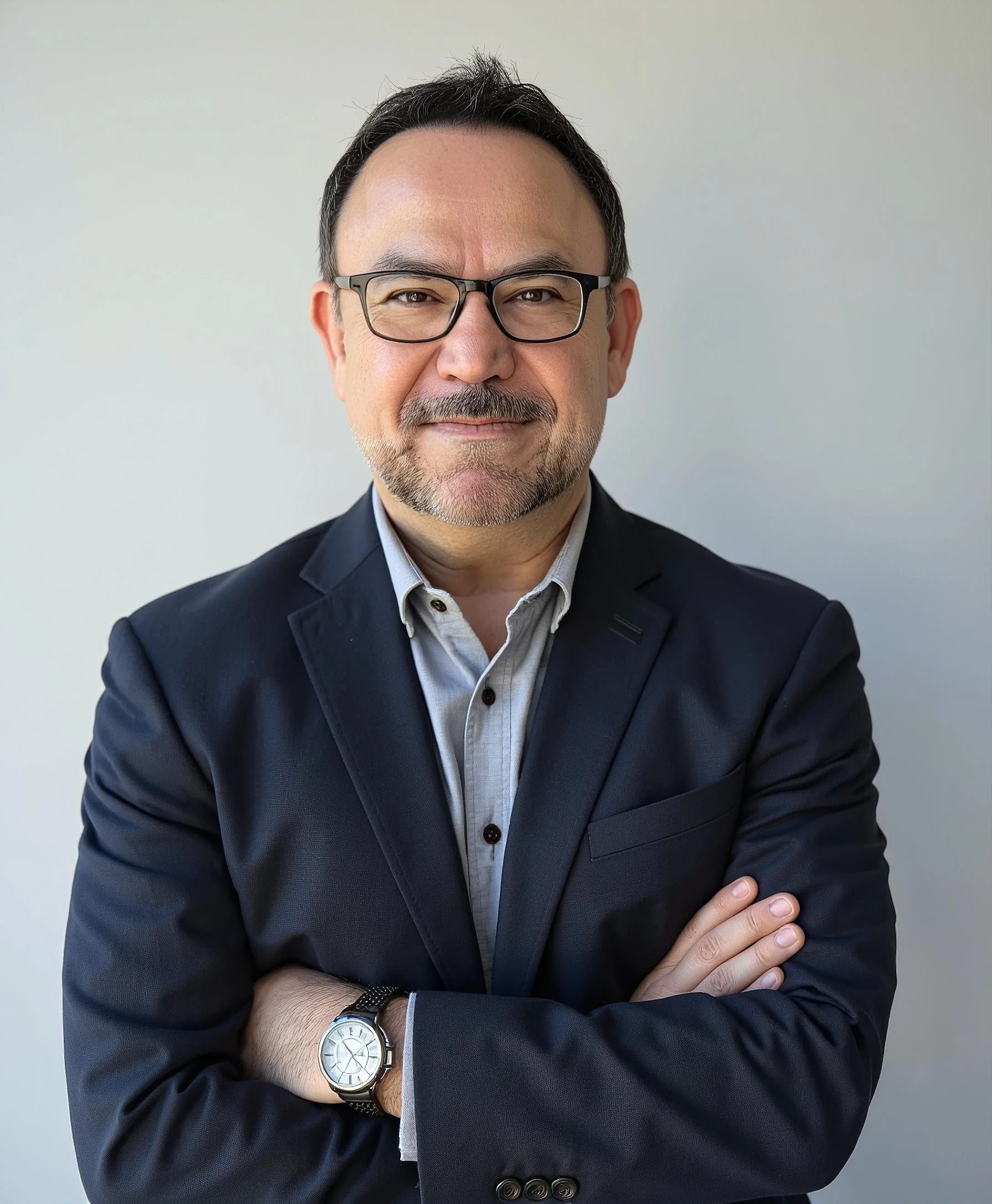
Javier Jimenez
Founder
Javier Jimenez is the founder and president of the Public Service & Readiness Institute (PSRI), an independent organization focused on strengthening the institutions, communities, and leaders responsible for delivering public service.Javier founded PSRI around a central conviction: many of the nation’s most persistent public challenges are not caused by a lack of ideas, but by the gap between policy ambition and the capacity to execute. He created PSRI to bring fresh perspectives and new thinking to these challenges—questioning long-held assumptions, bringing together voices and disciplines that do not always work alongside one another, and translating research and ideas into practical solutions. Through this approach, PSRI seeks to strengthen the institutions and communities responsible for turning good policy into meaningful outcomes.
Javier is a graduate of Harvard University, where he remains active in the Harvard community through alumni and veteran leadership.
-

Aileen Lorge
Program Associate & Research Lead
Aileen Lorge is a master’s student and George Washington Institute for Korean Studies fellow at the Elliott School of International Affairs. She is specializing in Korean Studies and International Security Policy, with a focus on national identity, the military, and nuclear policy. She graduated summa cum laude from Vanderbilt University in 2024, and has held two undergraduate research assistantships and most recently with the United Sailors and Soldiers for America, where she led a team to transform important issues such as food security, spouse employment, and childcare for our veterans and military families into accessible and actionable items for U.S. policymakers. -

Emme Babb
Program Associate
Emme Babb is a Program Associate at the Public Service & Readiness Institute (PSRI), with experience across government, policy research, and nonprofit organizations. Her work focuses on policy research, partnership development, and connecting academic and public-sector institutions to advance PSRI’s public service and research initiatives. Emme is a student at the University of North Carolina at Chapel Hill, where she studies Political Science and Public Policy with a minor in Social & Economic Justice. -
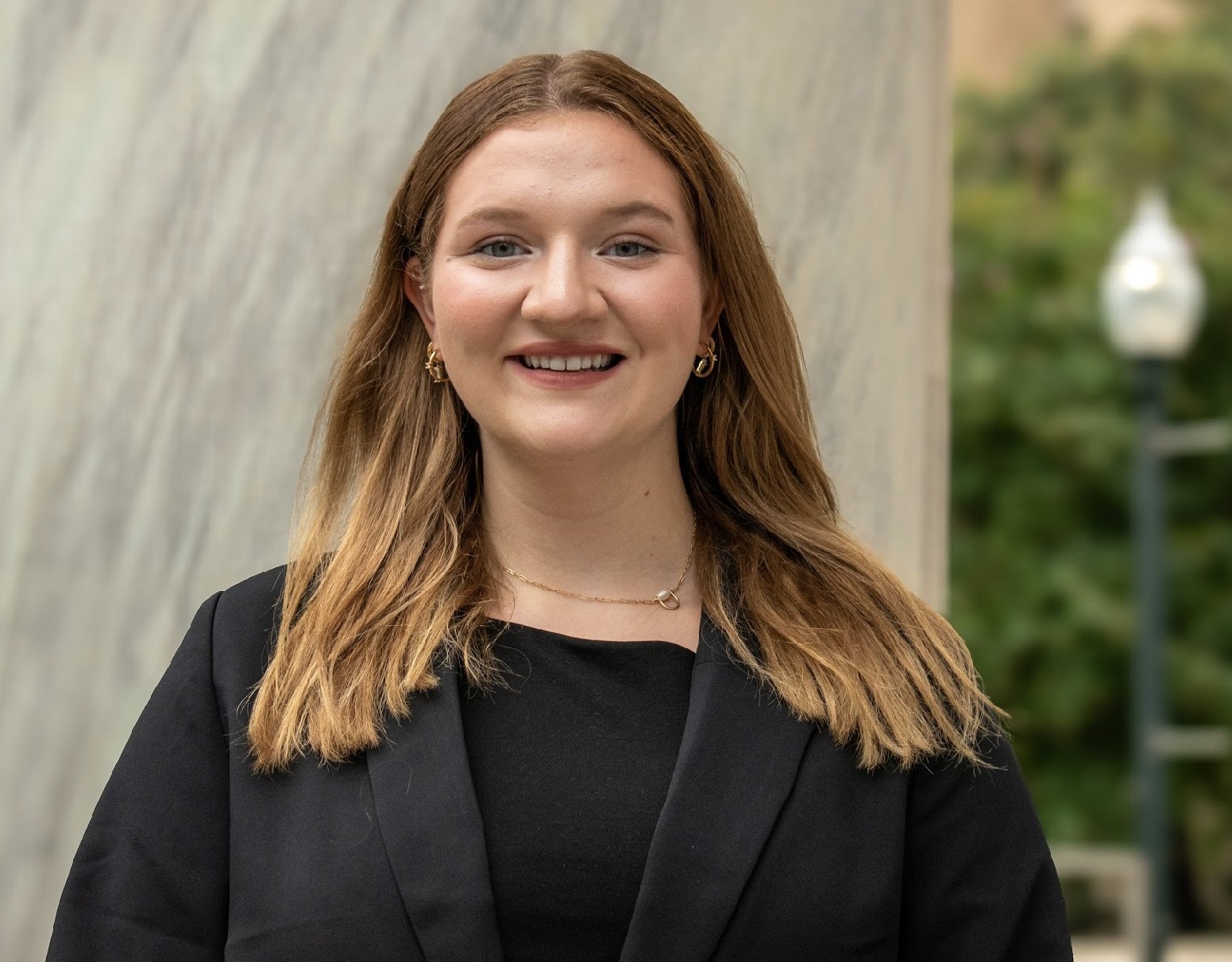
Ella Adkins
Communications Associate
Ella Adkins is a current undergraduate student at American University studying Communications, Legal Institutions, Economics, and Government (CLEG) with a minor in Public Health. She has worked previous roles in social media positions and is in charge of multiple social media accounts affiliated with American University. At PSRI She works primarily with the teams social media and communications needs.
Advisory Committee
PSRI is assembling an advisory committee of practitioners, scholars, and public service leaders to guide its research agenda and hold its work to the standards described above. Committee members will be listed here as appointments are confirmed.